Great discoveries often begin with small gestures. For John Atanasoff, one such gesture was a gift from his father: a slide rule that revealed the pleasure of solving increasingly difficult problems.
01 / THE BEGINNING
Bulgarian roots. An American childhood.
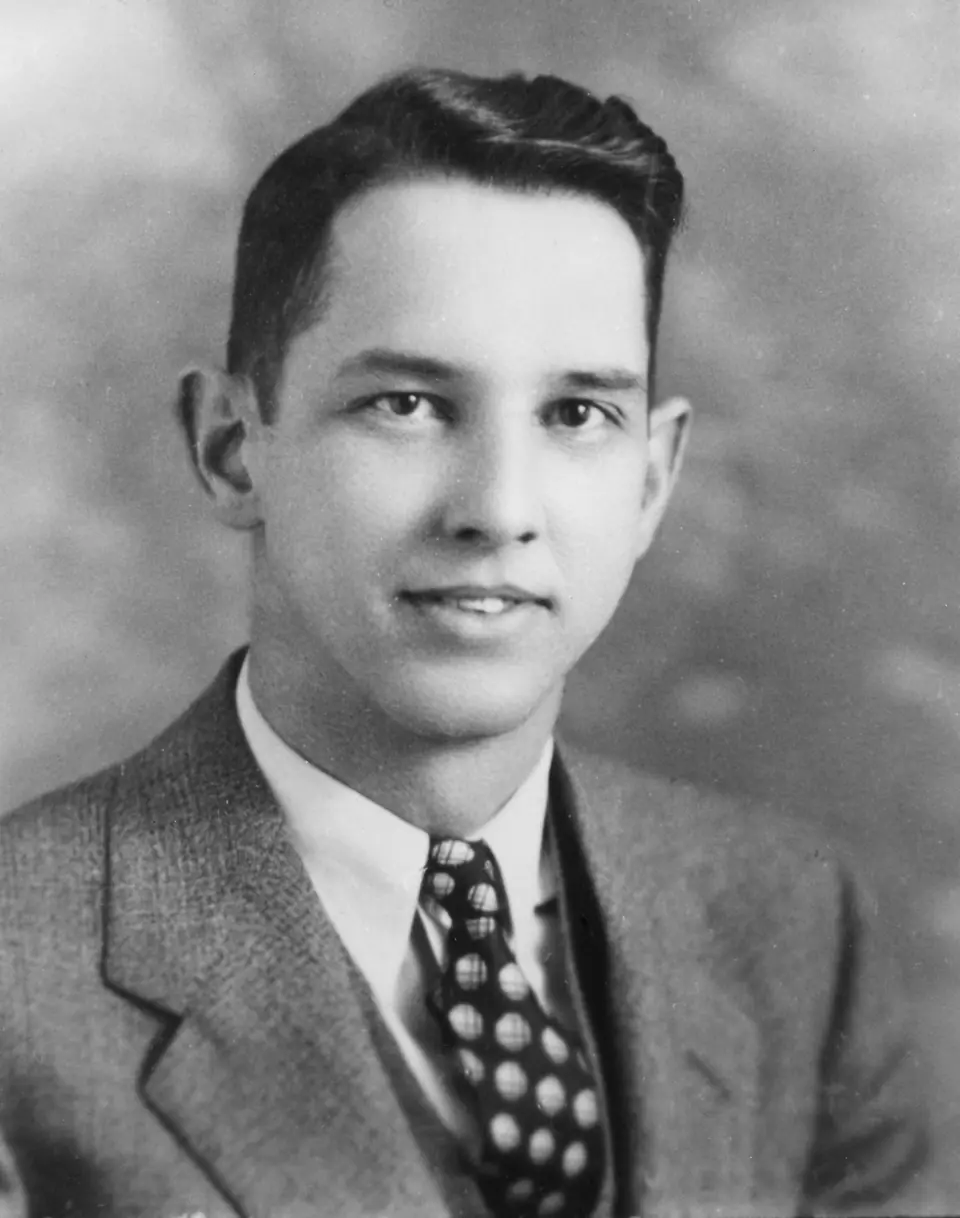
John Vincent Atanasoff was born on 4 October 1903 in Hamilton, New York. His father, Ivan Atanasoff, was a Bulgarian immigrant who worked as an electrical engineer. His mother, Iva Lucena Purdy, was a teacher. Science was not a distant abstraction at home. It lived in their conversations, books and everyday experience.
The family moved to Florida. There, John grew up close to his father's work and gradually became fascinated by electricity, mechanics and mathematical problems.
02 / THE SPARK
One slide rule changes everything.
Around 1913, his father gave young John an old slide rule and its instructions. The boy began studying it independently, soon exploring logarithms, powers and numeral systems, unusual subjects for a ten-year-old.
Years later, Atanasoff remembered the event as a turning point in his interest in calculation. The attraction was not merely finding answers quickly, but understanding how a system could represent and manipulate numbers.
03 / THE UNIVERSITY YEARS
From student to professor.
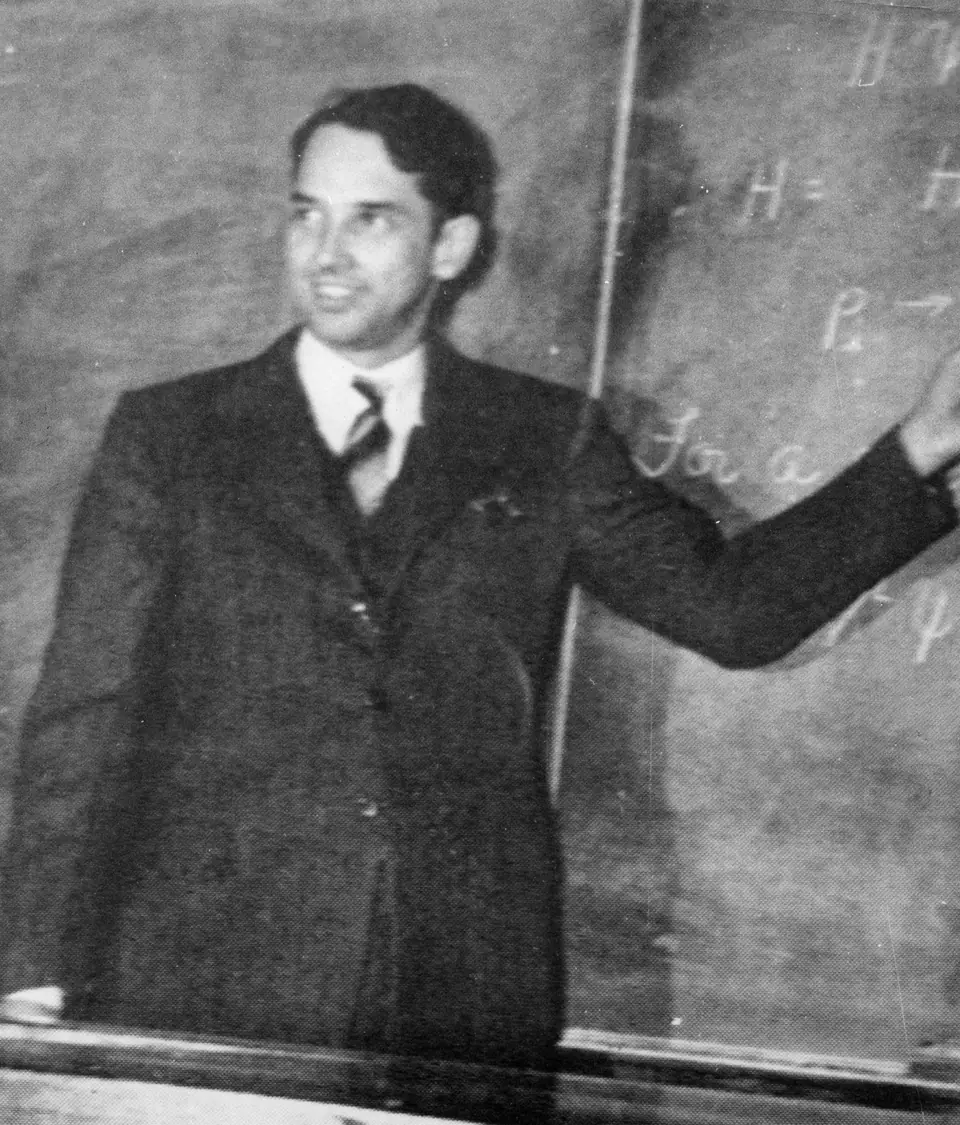
In 1925, he graduated in electrical engineering from the University of Florida. He earned a master's degree in mathematics from Iowa State College in 1926, and a doctorate in physics from the University of Wisconsin in 1930.
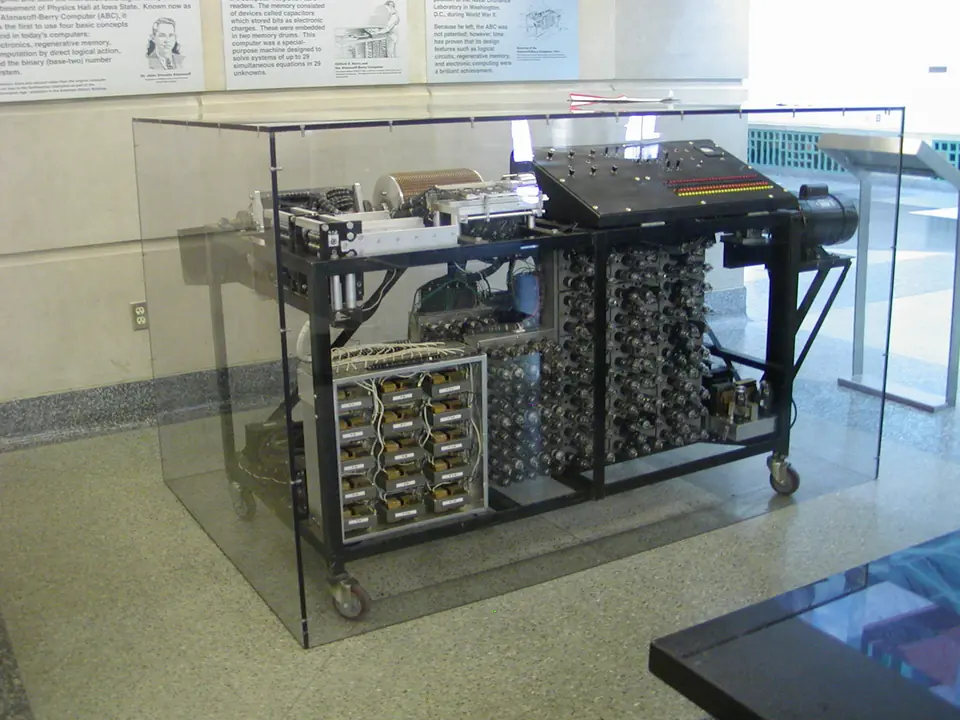
His doctoral work involved hours and weeks of repetitive calculations. A mathematical problem could be solvable in theory yet practically impossible to complete. That frustration gradually led him towards a new kind of computing machine.